Sagging or Pulling-Away Gutters? Why and What to Do
A Roof Built for This Region's Weather
Roofs in central Pennsylvania take a beating that milder parts of the country never see, and the right install is built for it. Winters here run through freeze and thaw cycles, sometimes several in a single week, where snow melts during the day and refreezes at night. That cycle drives ice dams, ridges of ice that form at the eaves and force meltwater backward, up and under the shingles. Without ice and water shield at the lower edge and balanced attic ventilation, that water finds its way inside.
Summers swing the other way, with heat and humidity that bake and warp shingles never rated for it. Add the wind and hail that come with spring storms crossing the region, and you have a climate that punishes shortcuts. A roof installed for this area accounts for all of it: ventilation that manages attic heat and moisture, ice protection at the eaves, and shingles rated for the wind loads we actually get.
A new roof returns a large share of its value at resale, and it ranks among the strongest moves you can make before listing. The reason is simple. Buyers fear two things above almost everything else: foundations and roofs. A roof with visible age signals future work, and future work becomes a negotiating chip that chews into your asking number. Replace it, and you take that chip off the table.
The value also comes from confidence. An appraiser walks the property and notes condition. A home inspector climbs up and checks the field, the valleys, the flashing. When the install is clean and recent, those reports come back without red flags, and a clean inspection keeps deals from stalling. Across this region, where housing stock runs older and many roofs are pushing past their useful life, a recent install stands out even more. It tells everyone the heavy lifting is already done.
Quick Answer: Sagging or pulling-away gutters almost always trace back to one of three problems: failed or under-spaced hangers, waterlogged fascia boards that can no longer hold a fastener, or excess weight from standing water, wet leaves, or ice. A gutter that dips in the middle or has visibly separated from the roofline needs attention within days, not months, because the longer it hangs loose, the more water gets pushed behind the fascia instead of into the downspout. Most sagging sections can be repaired by re-hangering the run at tighter spacing and correcting the pitch, but if the fascia underneath is soft or crumbling, that wood has to be addressed first or the new hangers will fail the same way the old ones did.
You notice it on a walk around the house after a hard rain: one stretch of gutter has pulled a few inches off the roofline, water is dribbling down the siding instead of running toward the downspout, and there's a visible dip where the channel used to run arrow-straight. It's easy to write it off as cosmetic. It isn't. A sagging gutter is a system that has already lost its grip on the house, and every storm after that first sag makes the separation worse.
Gutters are a suspended system — the whole channel hangs from a row of brackets screwed into the fascia board, holding what can be several hundred pounds of water during a heavy downpour. When even a few of those attachment points fail, the remaining hangers absorb more load than they were built for, and the section starts to bow. Left alone, that bow turns into a full separation, and a separated gutter dumps water exactly where you don't want it: against the fascia, behind the siding, and down toward the foundation.
What's Actually Happening When a Gutter Sags
A gutter that sags in the middle or pulls away at one end is showing you a support failure, not a gutter failure. The channel itself is usually still structurally fine — it's the connection between the gutter and the house that's given out. Three things typically cause that connection to break down.
Hangers Have Loosened Or Sheared Off
Gutter hangers endure repeated expansion and contraction from seasonal temperature changes. Over time, screws can loosen, while older spike-and-ferrule systems may gradually pull away from the fascia.
The Fascia Board Underneath Has Softened
Hangers depend on solid fascia for secure attachment. Persistent moisture from leaks, ice buildup, or aging can soften the wood, preventing screws from maintaining a reliable hold under gutter weight.
The System Is Carrying More Weight Than It Was Designed For
Clogged gutters can accumulate standing water, wet leaves, and ice, creating excessive weight. That added load strains hangers, especially on older systems, eventually causing visible sagging or separation.
The Weight Problem: Water, Debris, and Ice
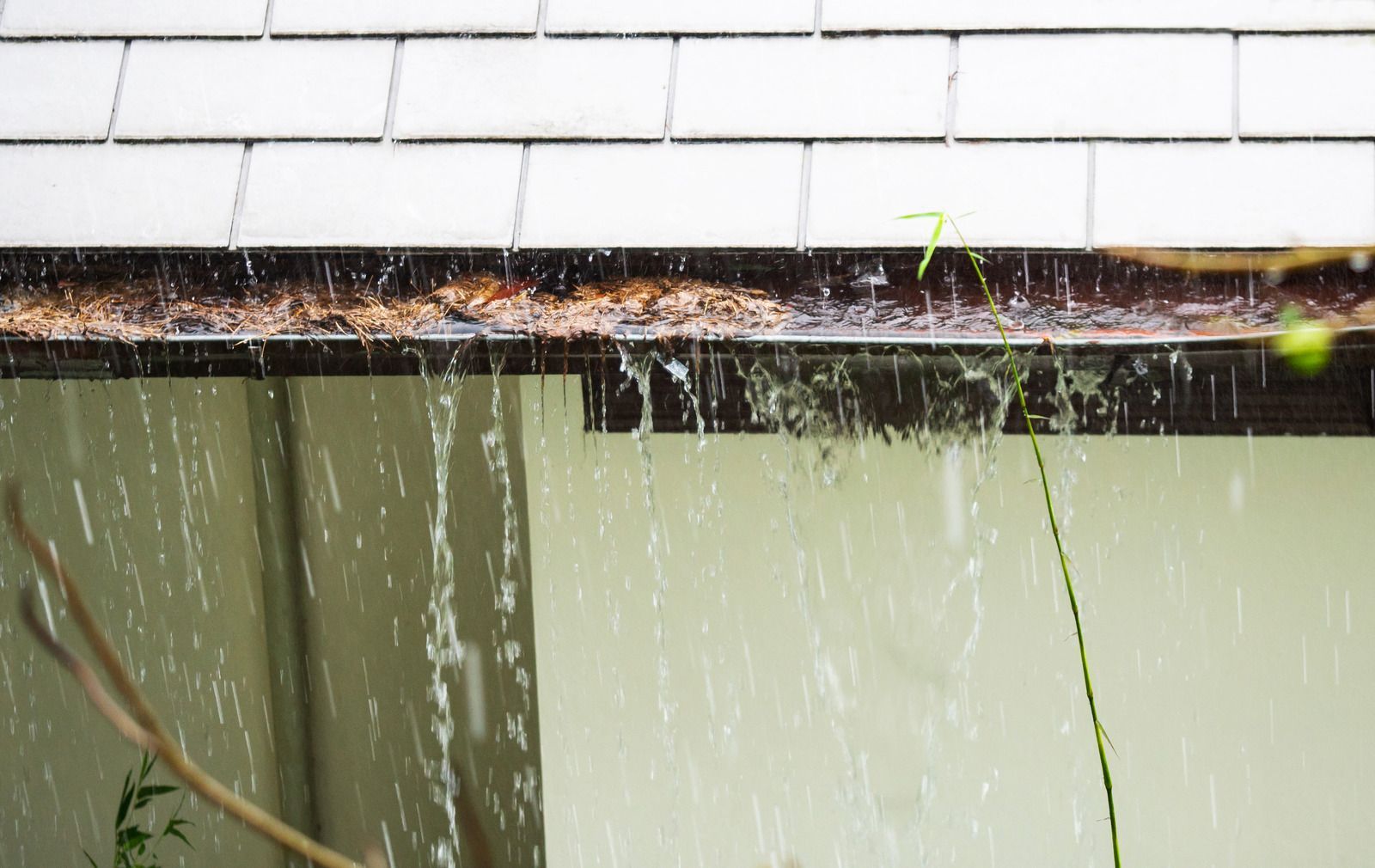
It's worth putting a number on this, because "a little water" understates what a clogged gutter is actually holding. A standard 5-inch aluminum gutter run holding standing water and packed wet leaves can weigh well over a pound per linear foot before you even factor in ice — meaning a 30-foot clogged run is carrying real, sustained weight against every hanger along that stretch. During South Central Pennsylvania's freeze-thaw winters, that weight compounds fast. Water that pools in a clogged gutter overnight can freeze solid, and as more meltwater refreezes on top of it, the ice load climbs into the hundreds of pounds on a long run. That's more than enough to bend hangers, crack seams, or tear a section loose from the fascia entirely.
This is also why sagging shows up seasonally. A gutter that looked fine in October can be visibly drooping by February, after a winter of freeze-thaw cycling loaded weight onto brackets that were already working at their limit. If your gutters tend to sag in the same spot every winter, that's a sign the hanger spacing or fascia condition at that spot was marginal to begin with — and it will keep failing in the same place until it's actually repaired.
Hanger Spacing and Installation Shortcuts
Not every sagging gutter is old. Some sag within a few years of installation, and the cause is usually spacing. Gutter hangers are meant to be installed at fairly tight intervals — commonly somewhere in the 18-to-24-inch range for most residential systems — because that spacing is what lets the channel carry a full storm's worth of water without bowing between supports. When hangers are spaced farther apart to save time or materials, every inch of gutter between two hangers is unsupported, and that's exactly where a dip starts to form.
You can often spot under-spaced hangers just by looking: if you can see long, even stretches of gutter with no visible bracket, or if the dip in a sagging section falls neatly between two hangers, spacing is very likely part of the problem. A repair that just adds one hanger at the worst point isn't a lasting fix in that scenario — the sections on either side are still under-supported and will start to sag next.
Tip: Walk your gutter line from the ground after a rain and look for water sheeting over the front edge in one specific spot rather than draining evenly into the downspout. That's usually the exact location of a low point or hanger failure, and it saves you from climbing a ladder just to find the problem.
Fascia Damage: The Silent Cause Behind Pulling-Away Gutters
A gutter that has fully separated from the roofline — not just sagging, but visibly hanging away from the house — points to something more than a loose screw. In most cases, it means the fascia board behind the gutter has been compromised by water for a while. This is the piece homeowners miss most often, because the fascia is hidden behind the gutter itself and doesn't get inspected unless something has already gone wrong.
Fascia boards take on water in a few predictable ways: from a gutter that's been leaking at a seam or end cap for months, from ice that sat against the wood all winter, or from roof runoff that missed the gutter entirely because the channel was already out of position. Once wood fascia absorbs enough moisture, it starts to soften, and a softened board simply can't hold a screw under load. New hangers driven into rotted fascia will pull loose again within a season, sometimes within a single hard storm — which is why a gutter that keeps re-sagging in the same spot after a "repair" almost always has a fascia problem underneath, not a hanger problem.
Checking for this doesn't require special equipment. Press a finger or a flathead screwdriver against the fascia where the gutter has pulled away. Solid wood resists; damaged wood gives, feels spongy, or shows dark staining and peeling paint. If that's what you find, the wood needs to be addressed as part of the gutter repair — not after it — because reattaching a gutter to bad wood just resets the clock on the same failure.
Repair or Replace: How to Tell If the Section Is Salvageable
Most sagging or pulling-away gutters don't need a full system replacement. If the channel itself isn't dented, cracked, or corroded through, the fix is usually a matter of restoring proper support: re-securing loose hangers, adding hangers where spacing was too wide, correcting the pitch so water runs toward the downspout instead of pooling, and repairing any fascia wood that's been compromised.
Replacement becomes the more sensible call when the damage goes beyond the attachment points — sections that have been bent or torn during the separation, seams that have split from the stress, or corrosion that's eaten through the metal in multiple spots. It's also worth considering full replacement on an older sectional system where sagging is showing up in several places along the run rather than one isolated spot, since that pattern usually means the whole system is nearing the end of its useful life rather than dealing with a single localized failure.
The honest answer for most homeowners falls in between: repair the section that's failed, and keep an eye on the rest of the run over the following year. A gutter system that sagged in one place because of a hanger or fascia issue isn't necessarily telling you the whole system is compromised — it's telling you that specific spot needs attention.
Warning: Don't ignore a fully separated gutter through another storm cycle while you decide what to do. Once a section is hanging away from the fascia, rainwater runs straight down the siding and can work its way behind it, and any remaining connected hangers are now carrying that section's full weight plus their own — which is often when the next bracket lets go.
What a Proper Repair Looks Like
A repair that actually holds starts with taking the sagging section down rather than just re-screwing it in place. That lets you see the true condition of the fascia, clean out any debris or standing water that contributed to the failure, and check the pitch across the whole run rather than just the visibly bad spot. From there, hangers go back in at correct spacing, any soft fascia gets repaired or replaced so the new fasteners have solid wood to bite into, and the section is reset with a slight pitch toward the downspout — generally a small drop over the length of the run, enough that water always has somewhere to go rather than sitting still.
Skipping any one of these steps is usually why a "quick fix" sag comes right back. Re-screwing a hanger into wood that's already failing, or resetting a section without correcting the pitch, buys a season at most before the same spot droops again.
Preventing Repeat Sagging
Once a section has been properly repaired, keeping it that way comes down to controlling the two things that caused the problem in the first place: weight and moisture. Clearing gutters of leaves and debris before they can hold standing water, particularly heading into fall and again before winter sets in, keeps the system from carrying weight it wasn't designed for. If a stretch of gutter runs under trees and clogs repeatedly no matter how often it's cleared, that's worth addressing directly rather than treating each clog as a one-off.
It's also worth having gutters checked after any storm severe enough to bring down branches or heavy rain in a short window, since that's when hangers under marginal load are most likely to fail. Catching a loose hanger or a slightly softened fascia board early is a small fix. Catching it after the section has already torn away and taken a piece of fascia with it is a bigger one.
Frequently Asked Questions
Why do my gutters sag in the same spot every year?
A gutter repeatedly sagging in the same location usually indicates a weak point, such as loose hangers, softened fascia, or recurring debris buildup. Identifying and correcting the specific cause prevents repeated failures and further damage.
Can I re-hang a sagging gutter myself?
A single loose hanger may be manageable for an experienced DIYer. However, fully separated gutters or soft fascia require professional attention because new hangers cannot hold securely when the supporting wood is damaged.
How can I tell if the gutter or fascia is failing?
If the gutter separates while the fascia remains solid, the hangers may have failed. Dark, soft, crumbling, or missing wood indicates fascia damage, meaning the supporting structure likely failed before pulling the gutter away.
Does gutter sagging get worse in winter?
Yes, winter can worsen gutter sagging. Standing water freezes inside poorly pitched or clogged gutters, while repeated freeze-thaw cycles increase weight and stress on weakened hangers, potentially causing further separation or structural damage.
Is a sagging gutter causing damage or just an appearance issue?
A sagging gutter is more than cosmetic. When drainage is disrupted, water can spill onto siding, collect near the foundation, or reach the fascia. Addressing the sag helps prevent moisture-related damage from spreading.
What's the difference between fixing a hanger and fixing the pitch?
Replacing or adding hangers restores structural support, while correcting the pitch ensures water flows toward the downspout. A complete repair often requires both, especially when sagging has created a low point where water collects.
What Sagging Gutters Reveal About Your Home
A sagging or pulling-away gutter is rarely an isolated cosmetic issue. It usually signals a failed hanger, weakened fascia, excessive weight, or a combination of these problems. Once the gutter loses its proper position, water can spill over the edge or run behind the system, increasing the risk of damage to siding, fascia, and the foundation. Addressing the underlying cause restores both the gutter’s support and its ability to direct rainwater where it belongs.
For homeowners in Harrisburg, PA, seasonal rain, snow, ice, and freeze-thaw cycles can put additional stress on already weakened
gutter systems. J & D Gutters
brings 30+ years of experience to diagnosing and repairing these problems, with attention to hanger spacing, gutter pitch, fascia condition, and the overall drainage system. A properly repaired section should not simply look straight again; it should have solid attachment points, the correct slope, and enough support to handle normal weather without returning to the same sagging pattern.